Pokhara can fly to Dubai every day, but it still cannot fly to Delhi. That gap has come back into focus after the latest Nepal–India agreement on air routes left Pokhara–India flights unaddressed. Tourism leaders in the city say they are disappointed, Setopati reported on Friday, 27 November. They are urging the government to raise Pokhara International Airport in the technical talks that are now beginning with India.
Pokhara–India flights still missing
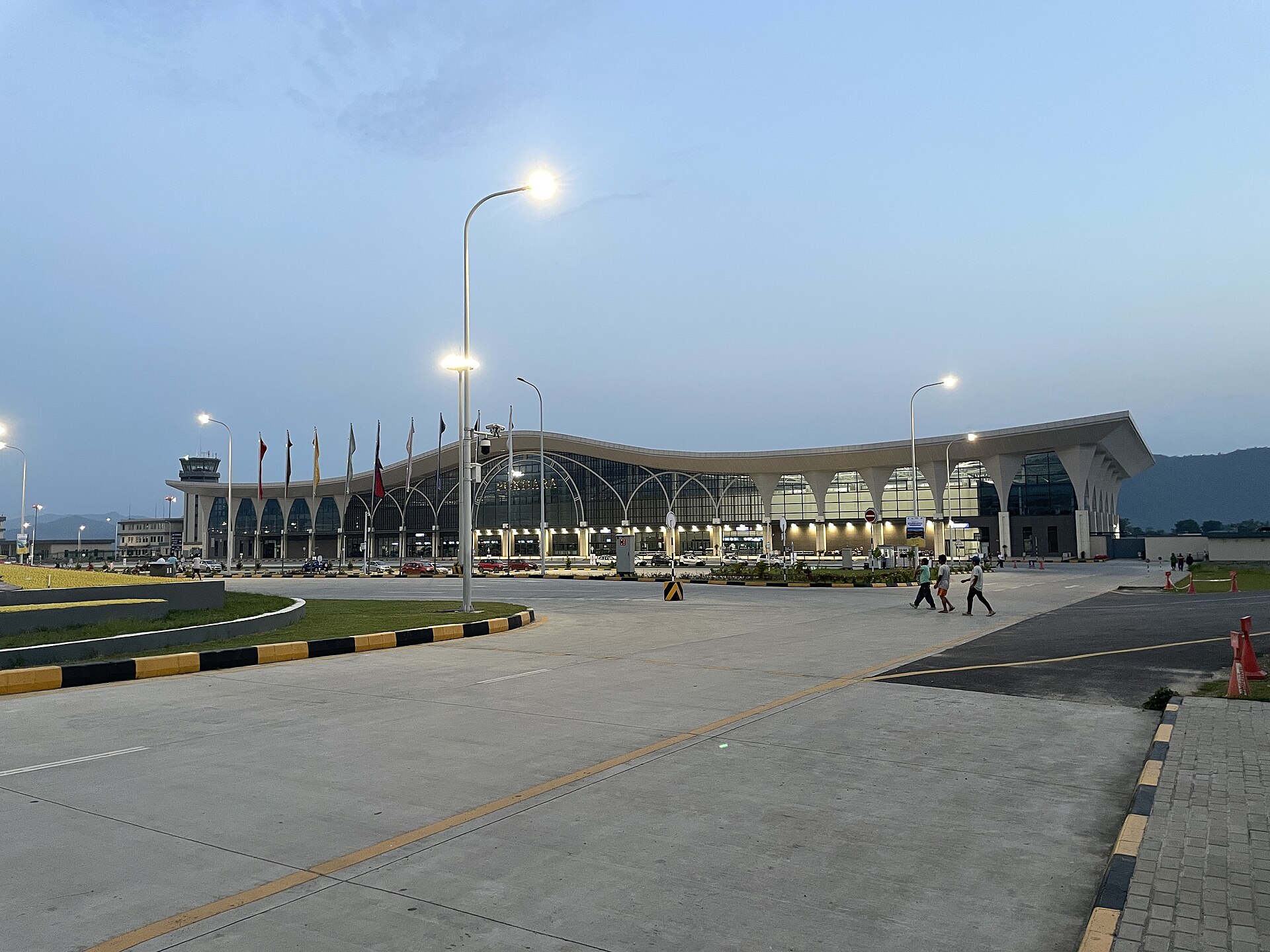
Pokhara International Airport opened on 1 January 2023. It was meant to give western Nepal a direct link to the world. Today it handles a regular international service to Dubai, operated by Flydubai.
Flights to India, however, have not started. Passengers who want to fly from Pokhara to cities such as Delhi, Varanasi or Dehradun must first travel to Kathmandu. Setopati noted the irony that Flydubai’s Pokhara flights already cross Indian airspace, while flights between Pokhara and India are not allowed.
Buddha Air’s long wait
Buddha Air, Nepal’s largest private airline, announced plans for flights from Pokhara to Delhi, Varanasi and Dehradun even before the airport opened. Nearly four years later, it still has not received permission for those services, according to Setopati.
The airline has also been looking at jet operations from Pokhara. Earlier this week, it revived its plan to use the airport as a base for international flights, as covered by the Kathmandu Post and in our report on Buddha Air’s Pokhara jet plans. Without access to India, though, the most obvious nearby market remains closed.
An airport still searching for traffic
The India question is part of a wider struggle. Since it opened, Pokhara International Airport has handled mainly domestic flights. Regular international operations were slow to arrive, and the airport’s loan repayments have added pressure to find more traffic.
Each new international route helps. Landing fees, passenger service charges and ground handling all bring income. A steady stream of flights to India, the closest large market, would give the airport a far stronger base than one daily Gulf service.
Airlines also need confidence before they commit aircraft to a new base. A carrier that sets up jet operations in Pokhara wants several profitable routes, not just one. That is why access to India features so strongly in the plans of local carriers.
What the Nepal–India deal covered
Prime Minister Balendra Shah visited India on 22 and 23 November. The joint statement issued after the visit said route B345, linking Kathmandu, Bhairahawa and Lucknow, would be made two-way. It added that other pending aviation proposals would be discussed in technical talks, according to the RSS summary carried by Ratopati.
The two-way route would shorten flights into Pokhara from the west, officials say. But it is a matter of airspace, not of flight permission. The statement did not mention any approval for scheduled flights between Pokhara and Indian cities.
In other words, the agreement could make the airport easier to reach for Gulf flights. It does not, on its own, open the door to India. Our earlier report explains how the Bhairahawa air route will become two-way.
Why Pokhara’s tourism sector wants India access
For Pokhara’s tourism industry, India is a key market. Indian visitors are among the largest groups of tourists in Nepal. Many come to Pokhara for its lakes and mountain views, and many continue to the Hindu pilgrimage site of Muktinath in Mustang.
The flow also runs the other way. Many Nepalis travel to India for work, medical treatment and pilgrimage. Direct flights from Pokhara would save them a long road trip or a connection through Kathmandu.
Setopati spoke to several local business leaders. Sangita Poudel, chair of the Nepal Association of Tour and Travel Agents (NATTA) in Gandaki, and Hari Bhujel, chair of the Pokhara Tourism Council, expressed disappointment that Pokhara was left out. Laxman Subedi, chair of the Hotel Association Pokhara, said the city has around 40,000 hotel beds. Filling them, local businesses argue, depends on better air links.
Trekking is another part of the picture. Pokhara is the gateway to the Annapurna region, one of the most popular trekking areas in the world. Indian trekkers and tour groups would gain from shorter connections, and so would the guides, porters and lodges that depend on them.
Dubai flights show what international links can do
The Dubai service gives an idea of the demand. Between 24 September and 23 November, Flydubai operated 122 round trips between Dubai and Pokhara. A total of 13,474 passengers travelled on them, airport general manager Jagannath Niraula told Onlinekhabar.
- Dubai to Pokhara: 8,115 passengers
- Pokhara to Dubai: 5,359 passengers
- Total: 13,474 passengers on 122 round trips
Many of these travellers are Nepali workers in the Gulf who live in western Nepal. For them, flying straight to Pokhara cuts out a long journey from Kathmandu. Local stakeholders believe India routes could bring similar benefits on an even larger scale. We covered the early numbers in our story on flydubai Pokhara flights.
The China question
Pokhara International Airport was built by a Chinese contractor with a loan from China. It has been promoted by some as a Belt and Road Initiative project. Some observers in Nepal believe this is why India has been reluctant to allow flights to and from the airport.
Setopati stressed that India has never officially confirmed this view. No Indian statement has linked the airport’s financing to the question of flight permission. Indian diplomats visiting Pokhara in the past have not given a clear answer on the issue either.
An expert’s advice for the talks
International relations analyst Aarogya Mohan Kafle told Setopati that Nepal should raise Pokhara directly in the coming technical talks. He suggested that Nepal reassure India that the airport is a purely economic project. In his view, a clear and confident approach could help remove doubts.
How flight permission works
Flights between two countries are usually governed by an air services agreement. Such agreements set out which cities airlines may serve, how many flights they may operate and which carriers are allowed. Airlines also need permission from the regulators in both countries before they can sell tickets.
Airspace access is a separate issue. A flight needs an agreed route and entry point to cross a border. For Pokhara–India services, both questions matter: the route must work in practice, and India must agree to the service itself. The new two-way route could solve part of the first problem, but not the second.
What happens next
The joint technical talks on air routes are the next opportunity. The Civil Aviation Authority of Nepal has said that a technical team has begun work on the two-way Bhairahawa route. Pokhara’s tourism sector wants the government to add Pokhara–India flights to the agenda.
For Buddha Air and other carriers, a decision would unlock routes they have wanted for years. For hotels, travel agents and trekking companies in Gandaki, it could bring new visitors. And for thousands of Nepali travellers, it could mean a shorter, easier trip to India.
Until then, the paradox remains. From Pokhara, a passenger can reach Dubai in a few hours, but must still travel through Kathmandu to reach a neighbouring country.
Featured image: Buddha Air ATR 72. Photo via Wikimedia Commons (free licence; author and licence on the file page).