A Peru military helicopter crash in the remote VRAEM valley has killed eight service members. A Peruvian Air Force (FAP) Mil Mi-17 went down near Sanabamba in the Ayacucho region on the night of Thursday, 26 November 2026, during a mission to pull out an army patrol. Nine people were on board, and the pilot is the only survivor, according to AFP and Peru’s RPP news network.
What happened in the Peru military helicopter crash
The Mi-17 was flying a night operation for Peru’s armed forces in the VRAEM. Its task was to extract a patrol working against armed groups linked to remnants of the Shining Path insurgency.
Contact with the helicopter was lost on Thursday night. Search teams reached the site on Friday, 27 November. Peru’s defence ministry said they had located the aircraft and all nine military personnel who were on board.
Eight of the nine had died. Five were members of the air force crew, and three were army soldiers from the patrol. Peruvian media named the air force dead as including the helicopter’s captain, Bruno Rivas Zegarra, along with four sergeants. The three army victims were two sergeants and a corporal.
The sole survivor
The only person to survive was the pilot, Commander Enzo Espinoza Roque. He was seriously injured. Reports from AFP, Anadolu Agency and Peruvian outlets say he was flown to Lima for medical treatment.
Investigation under way
The VRAEM Special Command confirmed the deaths in an official communiqué. It said the cause of the accident is under investigation. No final explanation has been given, and it is too early to say what went wrong.
Military accident investigations usually look at several areas at once. These include the aircraft’s maintenance records, the crew’s flight hours and training, weather at the time, and the conditions at the landing zone. Night operations in steep, forested terrain add extra challenges, so investigators will study the flight’s final minutes closely.
The surviving pilot’s account may be an important part of the inquiry once his health allows. Investigators will also examine the wreckage at the site.
Background: why the VRAEM is so difficult
VRAEM stands for the Valley of the Apurímac, Ene and Mantaro Rivers. It is a remote jungle and mountain zone in central-southern Peru. The area is known for coca cultivation and for small armed groups descended from the Shining Path.
Roads are few, and many villages can only be reached on foot or by air. That makes helicopters essential for the security forces. They move troops in and out, carry supplies and evacuate the wounded.
Flying there is demanding. Pilots deal with high ridges, deep valleys, sudden cloud and small landing areas cut into forest. Night missions are even harder, because crews depend heavily on instruments and night-vision equipment.
A second deadly Mi-17 loss this year
This is not the first deadly Mi-17 crash in Peru in 2026. In February, another Peruvian Air Force Mi-17 crashed and killed 15 people, Anadolu Agency reported. Two fatal accidents in one year are likely to bring fresh questions about the fleet and its operating conditions.
About the Mi-17 helicopter
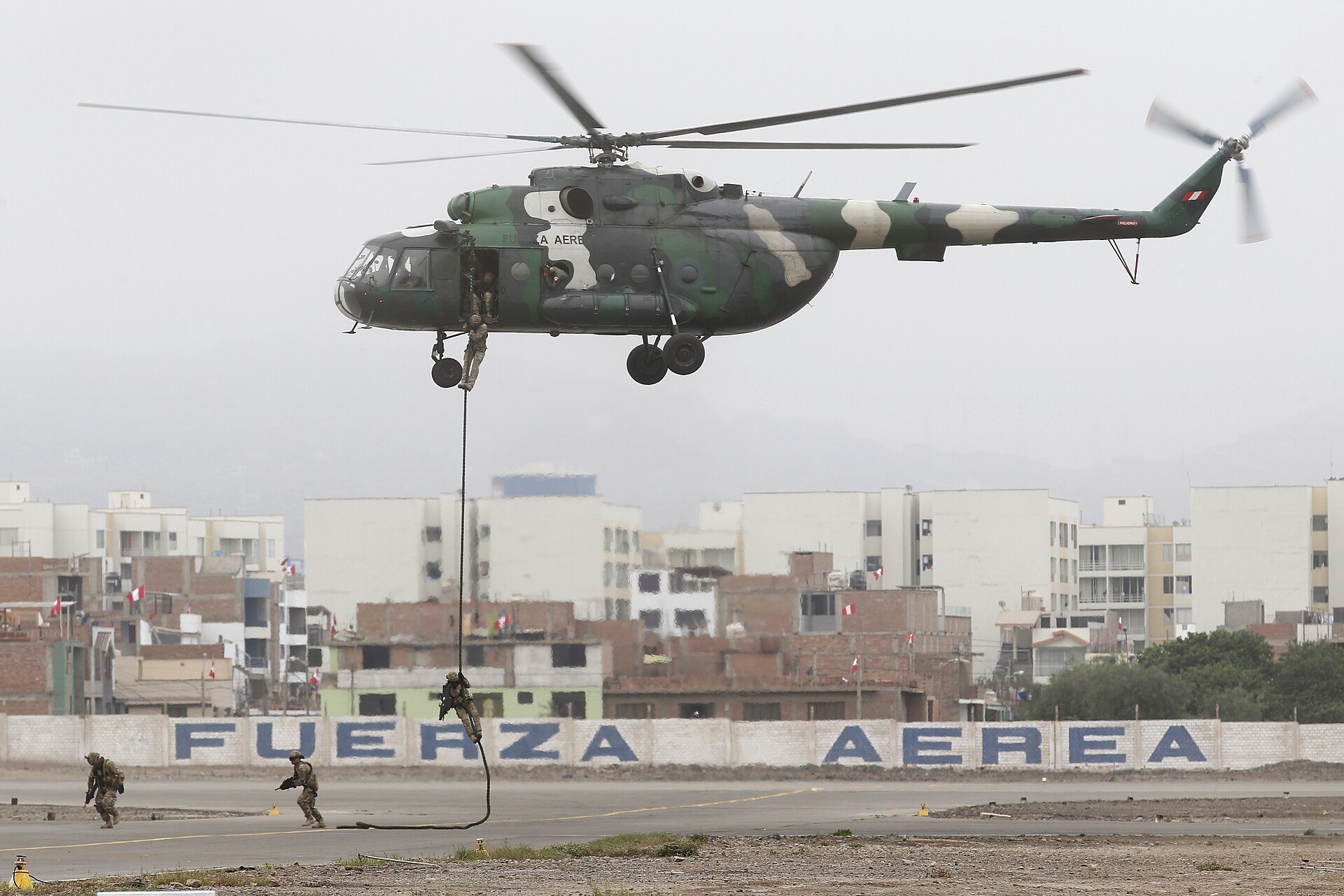
The Mil Mi-17 is a Russian-designed medium transport helicopter. It is part of the large Mi-8 family, one of the most widely built helicopter types in the world. Dozens of air forces use it for troop transport, cargo, rescue and disaster relief.
The type is popular because it is rugged and can carry heavy loads. It can usually carry more than 20 troops or several tonnes of cargo. It also performs reasonably well at high altitude, which matters in countries with big mountain ranges.
Like any aircraft, it depends on good maintenance and a steady supply of spare parts. Many operators have faced supply problems for Russian-built aircraft in recent years, though no link to this crash has been reported.
Why it matters for Nepal
Nepali readers will recognise many of the conditions in the VRAEM. Steep valleys, fast-changing weather and remote landing sites are part of daily flying in the Himalaya. The Nepali Army also flies helicopters from the Mi-17 family for rescue and relief work.
Accidents like this one are a reminder of the lessons that matter in mountain flying everywhere:
- Careful planning of landing zones, especially at night.
- Strict limits on weather and visibility for each mission.
- Regular training on night-vision and instrument flying.
- Reliable maintenance and access to genuine spare parts.
Military helicopter accidents have been in the news often this month. You can read our reports on the Turkey military helicopter crash in Malatya and the Jordan Black Hawk training accident. Earlier, a firefighting Super Puma also went down in Indonesia.
What happens next
The Peruvian Air Force and the VRAEM Special Command will lead the investigation. Findings in military cases are not always made public quickly. Any change to procedures or to the Mi-17 fleet may only become clear later.
For now, the focus in Peru is on the families of the eight service members who died and on the recovery of the injured pilot. Aviation Nepal extends its condolences to all those affected. We will update this report when officials release verified new information.
Sources
- AFP via Sharjah24
- Anadolu Agency via A News
- RPP (Spanish)
- Diario Correo (Spanish)
- Peruvian Air Force (official site)
Featured image: Peruvian Air Force Mil Mi-17 (file photo). Photo: Ministerio de Defensa del Perú, CC BY 2.0, via Wikimedia Commons.