Bamboo Airways, the Vietnamese airline that once flew dozens of jets across Asia and to the United States, no longer has a single aircraft in its fleet. Fleet tracker Planespotters updated its records on Friday, 27 November, to show zero aircraft, Tuoi Tre News reported. The Bamboo Airways fleet collapse comes as the carrier’s website has gone offline and its debts to the state, airports and staff keep mounting.
Bamboo Airways fleet falls to zero
Planespotters now lists every aircraft that ever flew for Bamboo as part of its historic fleet. According to Tuoi Tre, that history covers 47 aircraft. They include 22 Airbus A320s, 10 A321s, 10 Embraer E190s, three Boeing 787s, one A319 and one Boeing 737.
The tracker records that operations ceased on 6 November, after nearly eight years. Bamboo itself has not announced that it has stopped flying. Nor has it filed for bankruptcy. In practice, however, the airline appears to have no planes to fly.
The last flight
Vietnamese business site VietnamBiz identified the last remaining aircraft as VN-A227, citing FlightAware data. Its final recorded flight was from Macau to Da Nang on 6 November. Tuoi Tre reported the same date and route.
Since then, the jet has not flown. VietnamBiz said it had been idle for more than two weeks. Reports differ on whether the aircraft is an A320 or an A321, but both agree it was the only plane left.
Website offline and silence from the airline
Bamboo’s official website has been inaccessible for several days, both Tuoi Tre and VietnamBiz reported. The airline’s Facebook page has not posted since 20 November. The company has not explained either change.
Regulators have also moved on. The winter schedule of the Civil Aviation Authority of Vietnam, which runs from 25 October 2026 to 27 March 2027, does not include Bamboo at all. Five domestic airlines are listed instead.
- Vietjet: 1,930 flights a week
- Vietnam Airlines (with its regional arm Vasco): 1,877 flights a week
- Vietravel Airlines: 175 flights a week
- Sun PhuQuoc Airways: 116 flights a week
- Pacific Airlines: also listed in the schedule
Together, these carriers will operate 4,182 flights a week on 50 routes, according to Tuoi Tre. That is 202 more weekly flights than last winter. Vietnam’s air market is growing, even as one of its best-known names disappears.
Mounting debts to the state and airports
Bamboo’s financial problems are deep. As of 3 September, the airline owed about VND441 billion, or roughly $17 million, in unpaid taxes, both Tuoi Tre and VietnamBiz reported.
Its largest known debt is to Airports Corporation of Vietnam (ACV), the state company that runs most of the country’s airports. Tuoi Tre said Bamboo owed ACV about VND2.721 trillion, or around $105 million, at the end of the third quarter. That amount is close to 35 per cent of all money owed to ACV. An unnamed source told the newspaper that ACV plans legal action. TheStreet, citing Vietnamese media, put the ACV debt at around VND2.6 trillion.
Staff and passengers left waiting
Workers have also been affected. VietnamBiz reported that Bamboo owed about VND48 billion in social, health and unemployment insurance as of late September. The arrears stretch back 30 months and affect 318 employees, according to provincial social insurance data cited by the outlet.
At the end of October, employees petitioned the authorities over salaries that had been paid late repeatedly since mid-2026, VietnamBiz added. Passengers and travel agents also say they are still waiting for refunds. One agent told the outlet that more than four months had passed without any money being returned.
From rapid rise to slow decline
Bamboo Airways was founded in 2017 and began flying in early 2019. It was backed by the FLC Group, a property and resort developer. The airline aimed to mix low-cost and full-service models, and offered business class on many routes.
Growth was fast. Bamboo built a large domestic network and launched international flights across Asia and Europe. It also used its Boeing 787s to launch nonstop flights to San Francisco, as covered in our earlier report on Bamboo Airways’ first US flights to San Francisco.
However, the expansion was costly. According to TheStreet, rapid growth left the airline deep in debt. The pandemic hit just as the fleet was growing, and fuel and leasing costs added pressure.
The FLC scandal
A turning point came in 2022. Trinh Van Quyet, the founder of FLC, was arrested that year and later convicted in 2024 of stock manipulation. The case shook confidence in the group and its businesses, including the airline.
Bamboo then went through several rounds of restructuring. New investors came in, and management changed more than once. The airline shrank its fleet, returned leased aircraft and cut routes, but it never returned to stable operations.
A year of steady retreat
The final decline came in 2026. In August, Bamboo stopped selling tickets on dozens of routes, TheStreet reported. Other aircraft had already been retired or taken back by lessors.
For a time, the airline kept a single jet in service for charter work. That aircraft flew until early November. Once it was parked, Bamboo had no active operations left.
Bamboo’s story is not unique. Around the world, airlines that grew quickly on borrowed money have struggled this year as fuel prices rose. Several carriers in Europe and the Americas have stopped flying, including Norse Atlantic in Norway, as we reported in our story on the Norse Atlantic bankruptcy. Elsewhere in Southeast Asia, Malaysia has been weighing government support for AirAsia. Bamboo’s troubles, though, began well before the latest fuel shock.
The lesson from such cases is simple. An airline needs steady cash flow to pay for fuel, leases and staff every month. When debts build up and lessors take back aircraft, recovery becomes very hard, even in a growing market like Vietnam.
What happens next for Bamboo Airways
The airline has not announced any plan to resume flights. It has not explained its status to passengers, staff or the public, Tuoi Tre and TheStreet reported. TheStreet said a company representative could not be reached for comment.
Several questions now hang over the carrier:
- Whether ACV goes ahead with legal action to recover its debt
- How tax and insurance arrears will be settled
- Whether passengers and agents will ever receive their refunds
- Whether Bamboo keeps its air operator certificate without any aircraft
For Vietnamese travellers, the practical impact is limited, because other airlines have already absorbed Bamboo’s routes. For creditors and former staff, however, the outcome matters a great deal. Unless a new investor appears with a credible plan, Bamboo Airways looks set to remain an airline in name only.
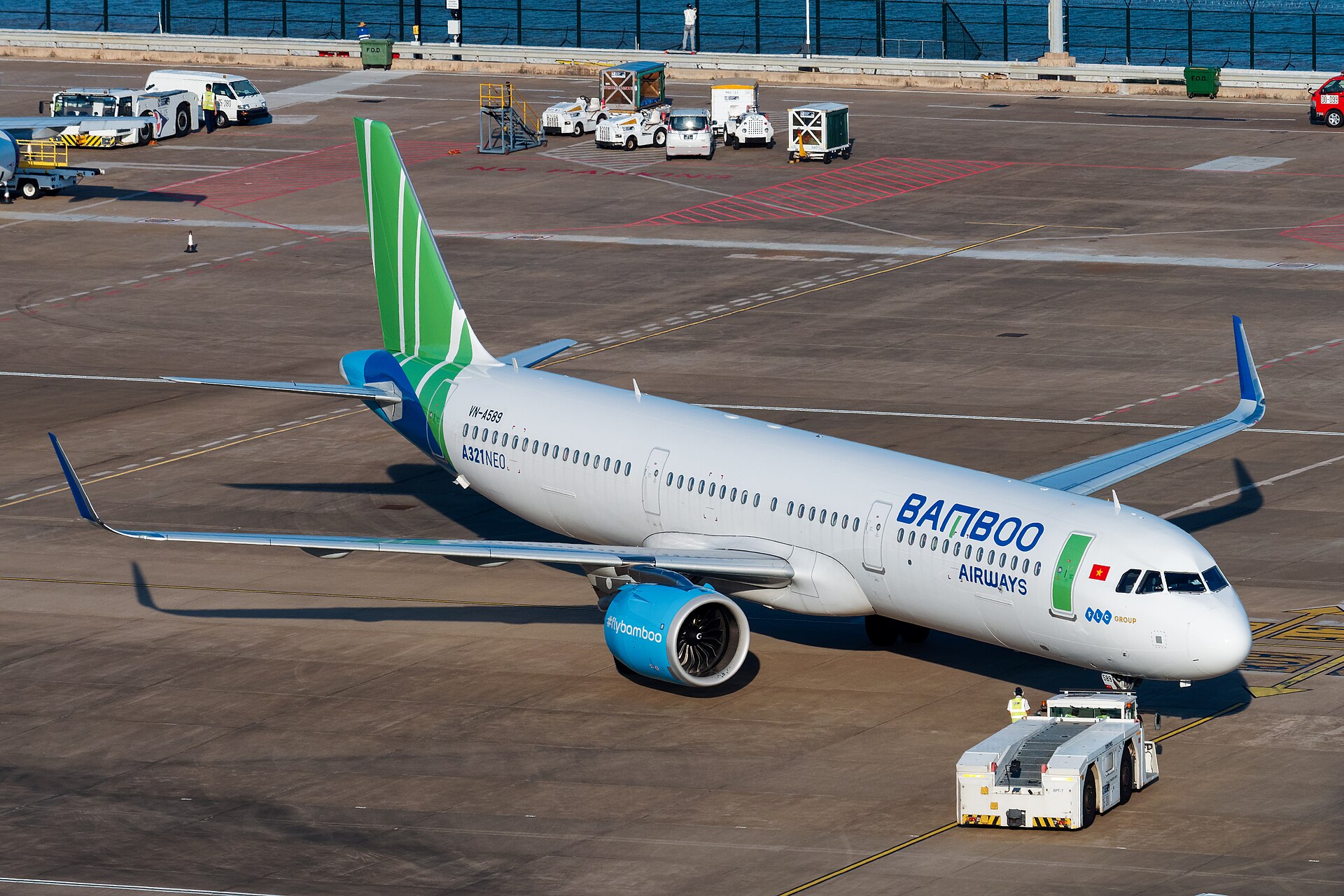
Featured image: Bamboo Airways Airbus A321neo VN-A590 at Tokyo Narita. Photo via Wikimedia Commons (free licence; author and licence on the file page).