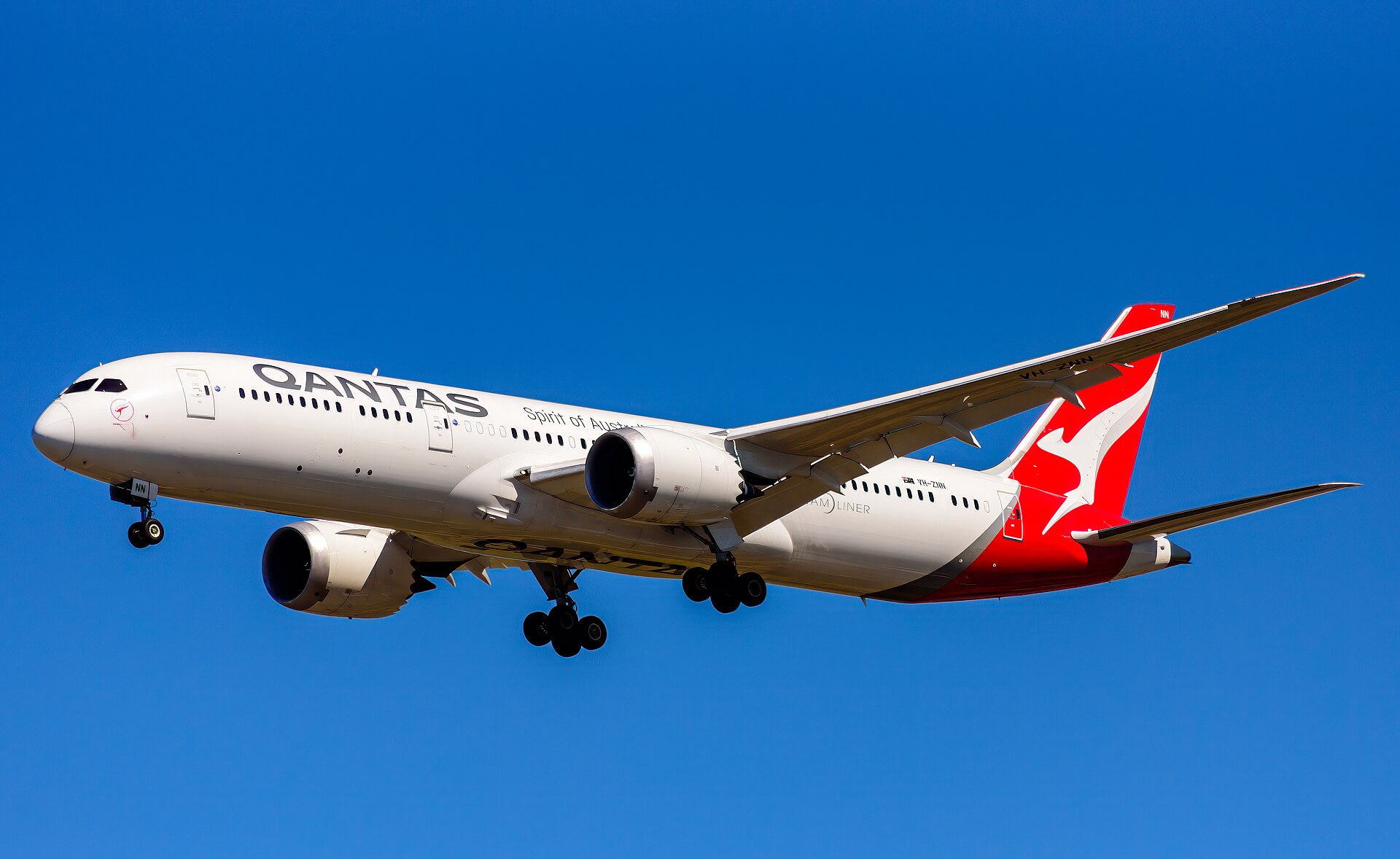
Qantas is close to choosing Boeing for most of a new order of about 20 long-range widebody jets, according to a Bloomberg report published on Friday, 27 November. The Qantas 787 order would be made up mainly of Boeing 787 Dreamliners, with some Airbus A350s, people familiar with the matter told Bloomberg, as reported by Investing.com via Yahoo Finance. Qantas says no decision has been made.
What the Qantas 787 order report says
The report describes a deal for about 20 long-range aircraft. Boeing is said to be in line for the bulk of it, with the 787. Airbus would supply a smaller number of A350s.
No split between the two types was given. Nor was a delivery schedule or an announcement date. The decision is described as not yet final, so the mix could still change.
Simple Flying and NonRev Travel News both followed up on the Bloomberg story. NonRev noted that Reuters had reported in June that Qantas was weighing an order of about 20 aircraft and studying both types.
How Qantas, Boeing and Airbus responded
Qantas did not confirm the report. The airline said it was “still in discussion with the relevant aircraft manufacturers” as part of its widebody fleet planning. It added that no decisions had been made.
Boeing referred questions to Qantas. Airbus said it does not comment on commercial discussions with its customers. Both responses are standard for manufacturers before a deal is signed.
Why Qantas needs more long-haul jets
The main driver is the retirement of the Airbus A380. Qantas flies a fleet of ten A380 superjumbos on its busiest long-haul routes. It had planned to begin retiring them around 2032.
That date has moved forward. According to NonRev and the aviation blog 2PAXfly, the A380s are now due to leave the fleet in 2028. Reports point to high fuel and maintenance costs as the reasons. 2PAXfly also mentioned difficulties in obtaining spare parts.
The A380 has four engines and burns far more fuel per flight than modern twin-engine jets. With jet fuel prices high this year, the economics of the superjumbo have become harder to justify. The type has also faced extra maintenance work, such as the A380 wing spar inspections ordered by EASA. Twin-engine jets such as the 787 and A350 carry fewer passengers, but at a much lower cost per seat.
The A330 replacement
The A380 is not the only aircraft Qantas must replace. The airline also flies a fleet of ageing Airbus A330s on medium-haul routes to Asia and across the Tasman. The 787-9s and 787-10s already on order were originally meant to take over that work.
Replacing two fleets at once puts pressure on aircraft supply. Both Boeing and Airbus have long waiting lists for widebody jets, and delivery slots in the late 2020s are scarce. Placing an order early helps an airline secure those slots before rivals do.
The current Qantas widebody fleet
Qantas already has a large widebody order book. According to 2PAXfly, it has 36 widebodies on firm order. Simple Flying, citing ch-aviation data, lists 12 A350-1000s and 12 A350-1000ULRs among them.
- 12 A350-1000ULRs for Project Sunrise ultra-long-haul flights
- 12 further A350-1000s for long-haul routes
- Four 787-9s and eight 787-10s, originally ordered to replace the A330 fleet
The airline also operates 14 Boeing 787-9s today, according to Simple Flying. Qantas took its first 787-9 in October 2017. The type flies some of the airline’s signature routes, including Perth to London.
Project Sunrise
Project Sunrise is Qantas’s plan to fly nonstop from Sydney to London and New York. The flights will take up to around 22 hours. To make them possible, Airbus is building a special A350-1000ULR with an extra fuel tank and a lower seat count.
According to NonRev, the first A350-1000ULR is due in April 2027. 2PAXfly reports that Sydney–London flights are planned to start in October 2027, followed by Sydney–New York in mid-2028. These aircraft are not part of the new order being discussed.
787 versus A350: what each offers
The Boeing 787 and Airbus A350 are the two main modern long-haul twinjets. Both are built largely from composite materials, which makes them lighter and more fuel-efficient than older aircraft.
The 787 family is smaller. The 787-9 is suited to long, thinner routes, while the 787-10 carries more passengers over medium-long distances. The A350-1000 is larger and can carry more passengers and cargo over long distances, which makes it a closer match to the A380’s role on trunk routes.
2PAXfly noted that Qantas’s August 2026 investor material describes the 787-9 as the strongest earner in its international fleet. The blog suggested the airline could end up ordering more 787-9s and 787-10s, with a smaller number of A350-1000s. That is the writer’s view, not a Qantas statement.
Fleet commonality also matters. Running fewer aircraft types reduces training, spare parts and maintenance costs. Because Qantas already flies the 787 and has A350s on order, either choice would fit into its existing plans without adding a new type.
What it would mean for Boeing
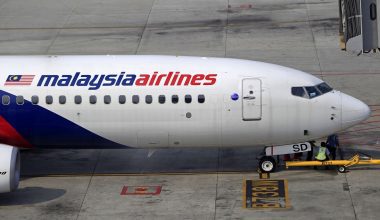
A Qantas win would add to a run of widebody success for Boeing. The Investing.com report noted that Boeing recently secured its largest order from a major Chinese airline in almost a decade. It also won its first widebody deal from Malaysia Airlines since 1995.
For Airbus, a smaller share would still be meaningful. Qantas is the launch customer for the A350-1000ULR, and adding more A350s would deepen that relationship.
Possible new routes
New aircraft could also open new destinations. Rivals in the region are expanding too, with Air New Zealand adding international flights for 2027. 2PAXfly said Qantas chief executive Vanessa Hudson has previously mentioned Chicago as a possible addition. The blog also pointed to seasonal Sydney–Las Vegas flights from December 2026 and Sydney–Cape Town nonstop flights from October 2027.
Large orders are often announced alongside results or at major industry events. Airlines also use such moments to signal confidence to investors. If a deal is confirmed, Qantas is likely to publish the details through the Australian Securities Exchange, where it is listed.
What happens next
For now, the order remains unconfirmed. Qantas says talks are continuing and that no decision has been made. A formal announcement, if it comes, would reveal the exact split between Boeing and Airbus.
2PAXfly reported that the additional aircraft would be intended for delivery from 2030. That would leave a gap of about two years after the A380s retire in 2028. The 787s and A350s already on order are likely to fill much of that gap.
Official updates on the fleet are published in the Qantas newsroom. Whatever the final mix, the decision will shape the Qantas long-haul network for the next two decades.