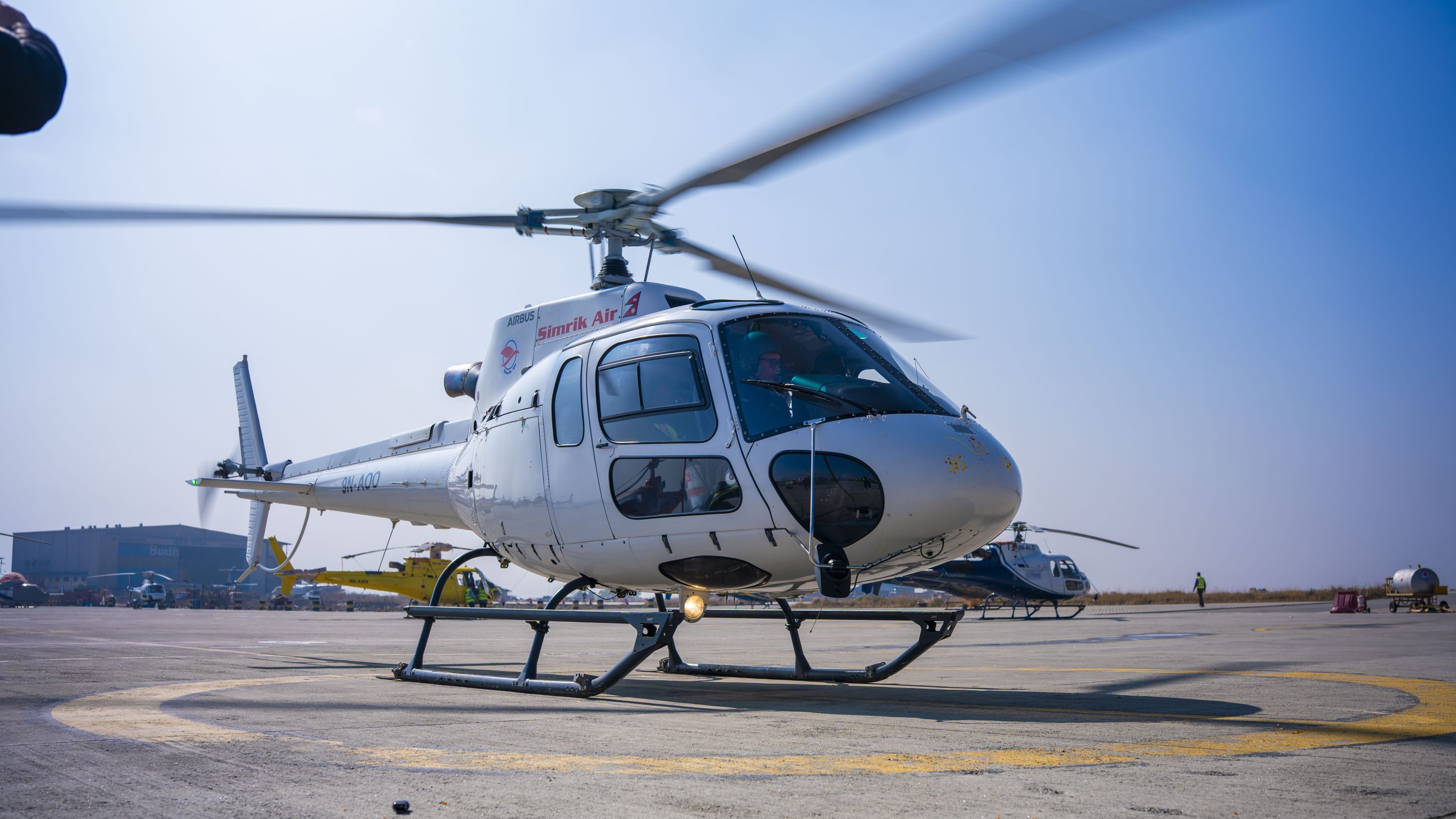
Simrik Air Helicopter has further strengthened its position as one of Nepal’s leading high-altitude helicopter operators with the addition of an Airbus H125 (AS350 B3e) helicopter to its operational fleet. The newly inducted aircraft, registered as 9N-AOO, represents a significant step forward in enhancing the company’s ability to conduct safe, efficient, and reliable operations across Nepal’s challenging Himalayan landscape.
Nepal’s aviation environment is widely regarded as one of the most demanding in the world. Extreme altitudes, unpredictable weather patterns, narrow valleys, and remote landing sites require aircraft and crews capable of operating at the highest levels of performance and precision. In this context, the addition of the Airbus H125 is both strategic and timely, responding to the growing need for dependable aerial support in rescue, tourism, logistics, and emergency response.
A Proven Performer in Extreme Environments
The Airbus H125 is globally recognized as the benchmark helicopter for high-altitude operations. Designed specifically to perform in extreme terrain and harsh climatic conditions, the aircraft has earned its reputation through decades of reliable service in mountainous regions across the world, including the Himalayas, Andes, and Alps.
One of the defining characteristics of the H125 is its exceptional power-to-weight ratio, enabling it to operate safely at high elevations where air density is significantly reduced. The helicopter is also known for its superior lifting capability, making it ideal for longline rescue missions, cargo sling operations, and aerial construction tasks. Its reliability and maneuverability have made it the preferred platform for operators working in remote and high-risk environments.
For Simrik Air, the induction of this aircraft strengthens its ability to execute complex missions with enhanced confidence and safety margins, particularly in areas that remain inaccessible by road or fixed-wing aircraft.
Strengthening Emergency and Rescue Capabilities
Emergency response remains one of the most critical roles of helicopter operations in Nepal. Each year, helicopters are called upon to conduct mountain rescues, medical evacuations, and disaster response missions in some of the country’s most remote locations. The Airbus H125 plays a vital role in these operations, offering pilots the performance and precision required to land or hover in confined high-altitude sites.
With the new H125 joining its fleet, Simrik Air enhances its readiness to support hospitals, emergency services, and government agencies during critical situations. Whether responding to trekking accidents, medical emergencies in rural communities, or natural disasters such as floods and landslides, the additional aircraft improves response time and operational coverage.
Longline rescue operations, which require precise control and stable performance in thin air, are another area where the H125 excels. These missions are often life-saving, demanding both advanced aircraft capability and highly trained flight crews. The fleet expansion ensures that Simrik Air can meet increasing demand for such specialized operations.
Supporting Tourism and Trekking Operations
Tourism remains a cornerstone of Nepal’s economy, with trekking, mountaineering, and pilgrimage activities drawing visitors from around the world. Helicopters play a vital role in supporting this sector by providing access to remote destinations, transporting supplies, and assisting trekkers in distress.
The Airbus H125 is particularly well-suited for high-altitude charter flights and trekking support operations. Its performance allows safe operations to popular destinations in mountainous regions, even under demanding conditions. With the addition of this aircraft, Simrik Air further strengthens its ability to support trekking operators, tour companies, and adventure tourism stakeholders.
Pilgrimage flights to remote religious sites also benefit from the expanded fleet. For many pilgrims, helicopter services provide the only feasible means of reaching high-altitude destinations safely and efficiently. The H125’s reliability and comfort make it an ideal choice for such missions.
Expanding Operational Flexibility
Beyond rescue and tourism, the Airbus H125 offers versatility across a wide range of specialized missions. The aircraft can be configured for cargo sling load operations, enabling the transport of equipment, construction materials, and essential supplies to remote locations. This capability is especially valuable in infrastructure development projects and humanitarian logistics.
Aerial firefighting is another area where the H125 plays a crucial role. Equipped with Bambi buckets or concrete buckets, the helicopter can support wildfire suppression and construction activities in areas where ground access is limited. As climate-related risks increase, the importance of aerial firefighting capabilities continues to grow.
The helicopter is also widely used for aerial surveys, filming, and photography missions. Its stable flight characteristics and unobstructed visibility make it suitable for media, mapping, and reconnaissance tasks. VIP and corporate charter services further benefit from the aircraft’s comfort, safety features, and performance reliability.
Fleet Growth Reflects Long-Term Vision
With the induction of the Airbus H125 registered as 9N-AOO, Simrik Air now operates a fleet of four helicopters—three Airbus H125 helicopters and one Bell 505 Jet Ranger X. This balanced fleet composition allows the company to deploy the right aircraft for a wide range of mission profiles, optimizing efficiency and safety.
The expansion reflects Simrik Air’s long-term commitment to strengthening its high-altitude operational capability rather than short-term growth. Each fleet addition is carefully evaluated to ensure alignment with operational requirements, safety standards, and client needs.
In an industry where reliability and preparedness are paramount, fleet investment plays a critical role in maintaining service quality. The addition of the H125 demonstrates Simrik Air’s proactive approach to meeting future operational demands while maintaining high safety and maintenance standards.
Commitment to Safety and Professional Excellence
Safety remains at the core of Simrik Air’s operations. Operating in one of the world’s most challenging aviation environments requires strict adherence to operational procedures, continuous crew training, and rigorous maintenance practices. The induction of a modern and proven aircraft such as the Airbus H125 aligns with this safety-first philosophy.
The company’s experienced pilots and technical teams are trained to operate and maintain aircraft under demanding conditions, ensuring that each mission is conducted with professionalism and care. By expanding its fleet with reliable platforms, Simrik Air reinforces its commitment to operational excellence and client confidence.
A Growing Role in Nepal’s Aviation Ecosystem
As Nepal continues to rely on helicopters fors for rescue, tourism, logistics, and emergency response, operators like Simrik Air play an increasingly important role in the national aviation ecosystem. The addition of the Airbus H125 not only enhances the company’s capabilities but also contributes to the overall resilience of aerial services in the country.
By supporting government agencies, NGOs and INGOs, diplomatic missions, corporate clients, and local communities, Simrik Air remains an essential partner in connecting remote regions and responding to critical needs.
Looking Ahead
The induction of the Airbus H125 marks another milestone in Simrik Air’s growth journey. As demand for high-altitude aviation services continues to rise, the company’s focus remains on strengthening its fleet, investing in safety, and delivering reliable services across Nepal’s most challenging terrain.
With a modern and capable fleet, experienced crews, and a clear operational vision, Simrik Air is well-positioned to continue serving Nepal’s aviation, tourism, and emergency response sectors with confidence and professionalism.